

Rethinking Affordability; It’s Work
By Mary Beth Maxwell

Part 1 of a Series on Work
Affordability has become the word of the day — from pundits, to politicians, to 10 point plans.
Working people who’ve been living it long before it became a talking point, were shushed when they tried to tell us. The reckoning on affordability has been a long time coming — but the real solution isn’t where many politicians and pundits think. Addressing affordability requires work.
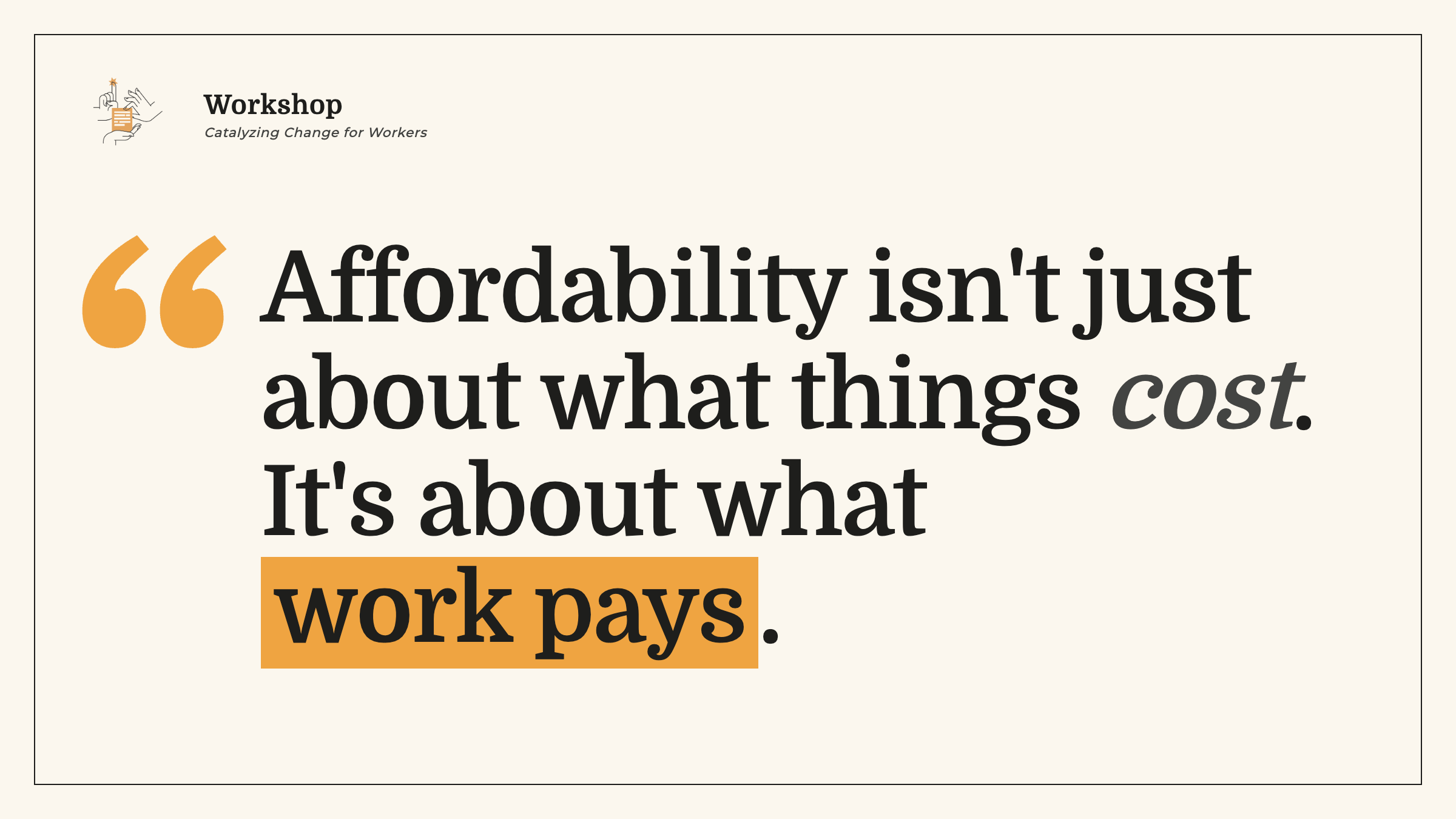
The promise of work was broken long before the current crisis/outcry around prices. Working people were offered a deal in the Clinton 90s: Accept lower wages, fewer unions, and jobs disappearing overseas — but in return get lower prices. Labor unions sounded the alarm. Factory towns and working class communities protested. They were ignored. For decades. Until prices started skyrocketing and it became clear the deal for working people was a stinker all along. Because affordability is not just about what things cost. It's about what work pays.
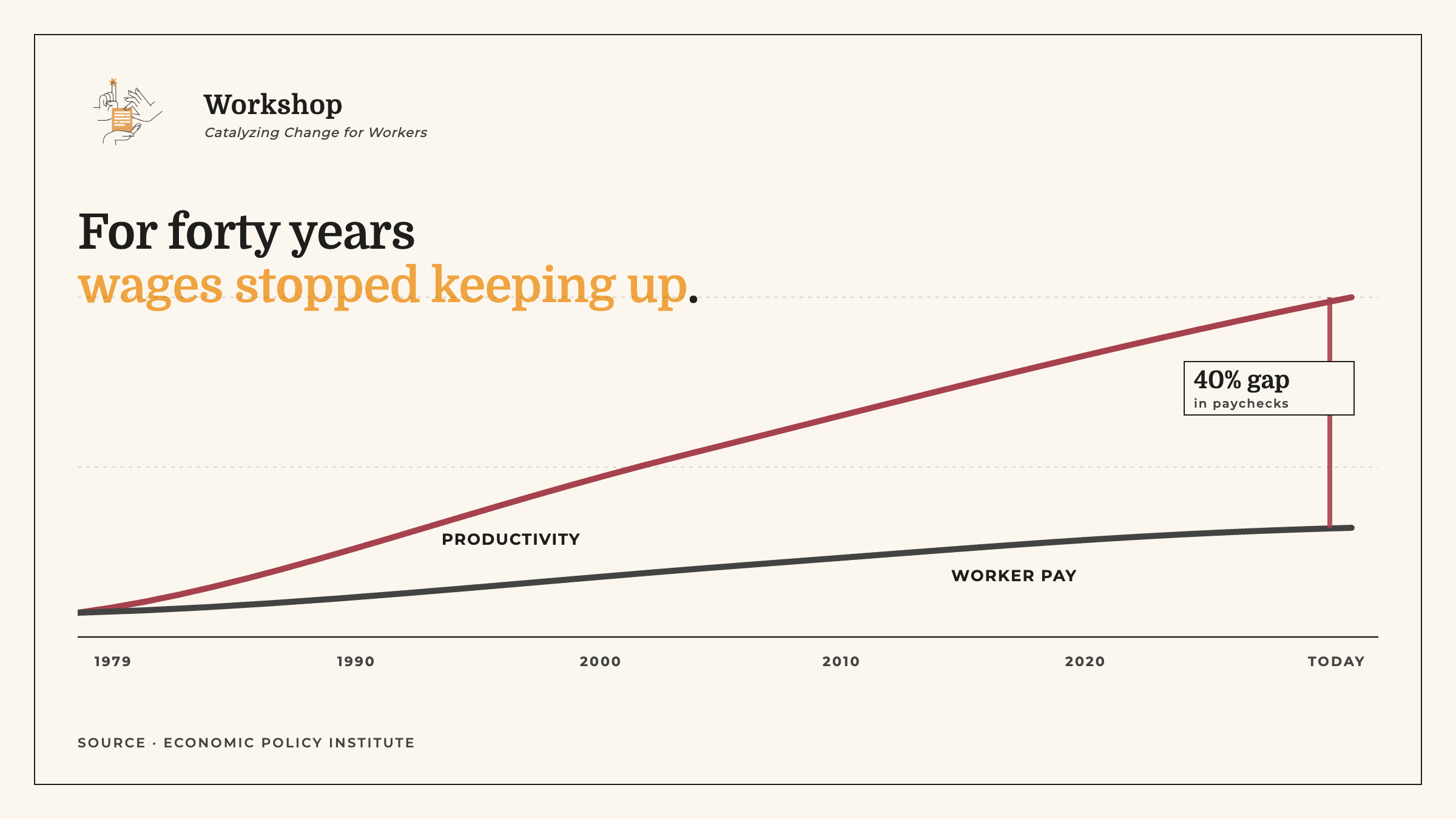
For decades, workers’ wages have not matched their incredible productivity. As a result, business and shareholder profits have soared, but worker wages have remained stagnant. Bloomberg reports labor’s share of productivity dropped to its lowest in 47 years. And according to the Pew Research Center, the middle class has reached its smallest size in fifty years. It didn’t have to be this way. Economic Policy Institute data show that if wages had kept pace with productivity gains, average worker paychecks today would be 40% higher.
40% more pay??? That would put a pretty big dent in most households’ affordability challenges! Most workers can’t afford things because they’re not being paid enough.
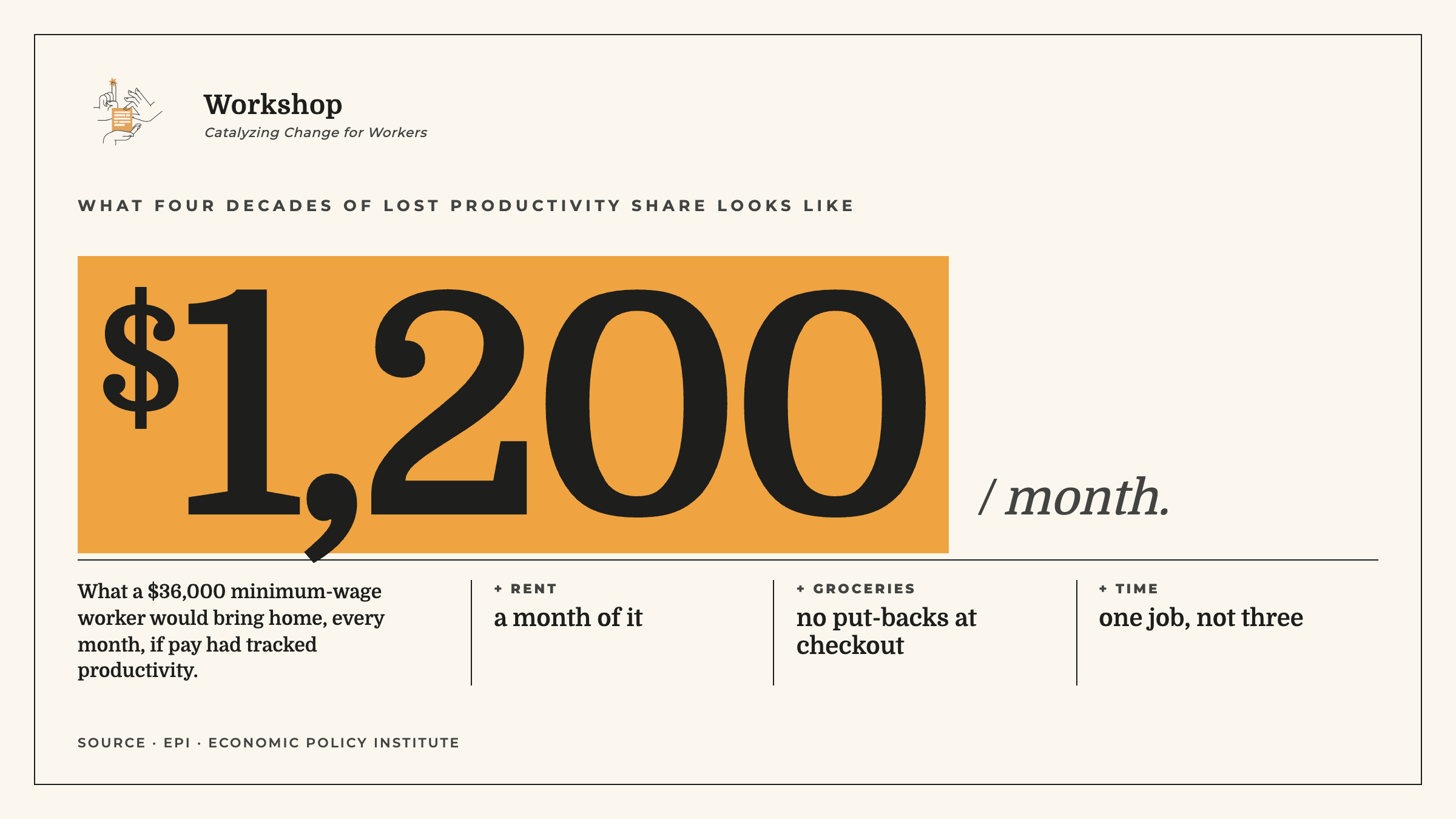
The reality is that if you’re a full-time minimum wage worker in the United States today — if you’re even lucky enough to be able to get 40 hours a week of shifts — you earn about $36,000 a year. It’s no wonder that over half of American adults on food stamps also work; their work pays poverty wages. If instead wages had kept pace with productivity over the last 40 years, they’d be earning $1,200 more a month. That's rent. That's food on the table. That’s not having to pay more child care so you can take a second or third job. That $1200 means a little more time. Time for your kids, elder care, your health, your life.
We don’t have an affordability crisis just because of prices. We have an affordability crisis because for 40 years, the gains from American worker productivity went to shareholders and executives and not to the workers who created it.
Solutions to Affordability most assuredly require systemic changes to housing, childcare, health care, utilities, groceries and more — things we can do that will indeed bring down the cost of living. But the truth is, lowering prices is very difficult, even when we succeed in lowering inflation, that means prices just don’t keep increasing as much. They still remain high.
As economist Heidi Shierholz makes clear “...affordability depends on both prices and wages. The roots of today’s affordability crisis actually lie not in recent price spikes, but in the long-term suppression of workers’ pay.”
Every dollar we put back in a worker’s paycheck is affordability policy. Every hour guaranteed, every union contract won, every wage floor raised — these are affordability solutions.
It will take real work to restore the dignity and earning power of work. To be sure, our system was built on low-wages (historically in the form of slavery, Bracero programs, Chinese railway workers and more). But there was a time, for many decades, when the cornerstone of the American middle class was that working hard meant you could earn enough to make a good life, send your kids to school, save for a vacation. We were proud of this American Dream. But we are going backwards.
Today, we barely flinch at corporations boasting about cutting “labor costs”, busting unions, and relying on low wages overseas. We look the other way as some of our most successful and popular brands pay people so little. Major corporations like Walmart and McDonalds extract huge profits from public systems and rely on SNAP and government benefits to subsidize their low wages. Companies like Uber, Lyft and Doordash dazzle Wall Street and make flashy promises but rely on very low wages. The Institute for Policy Studies reports that on average the CEO to Worker pay ratio is now 899 to 1 (what???) amongst some of our biggest name companies like Amazon, Best Buy, Starbucks and more. The demise of fairness and decent wages is taking its toll on our democracy.
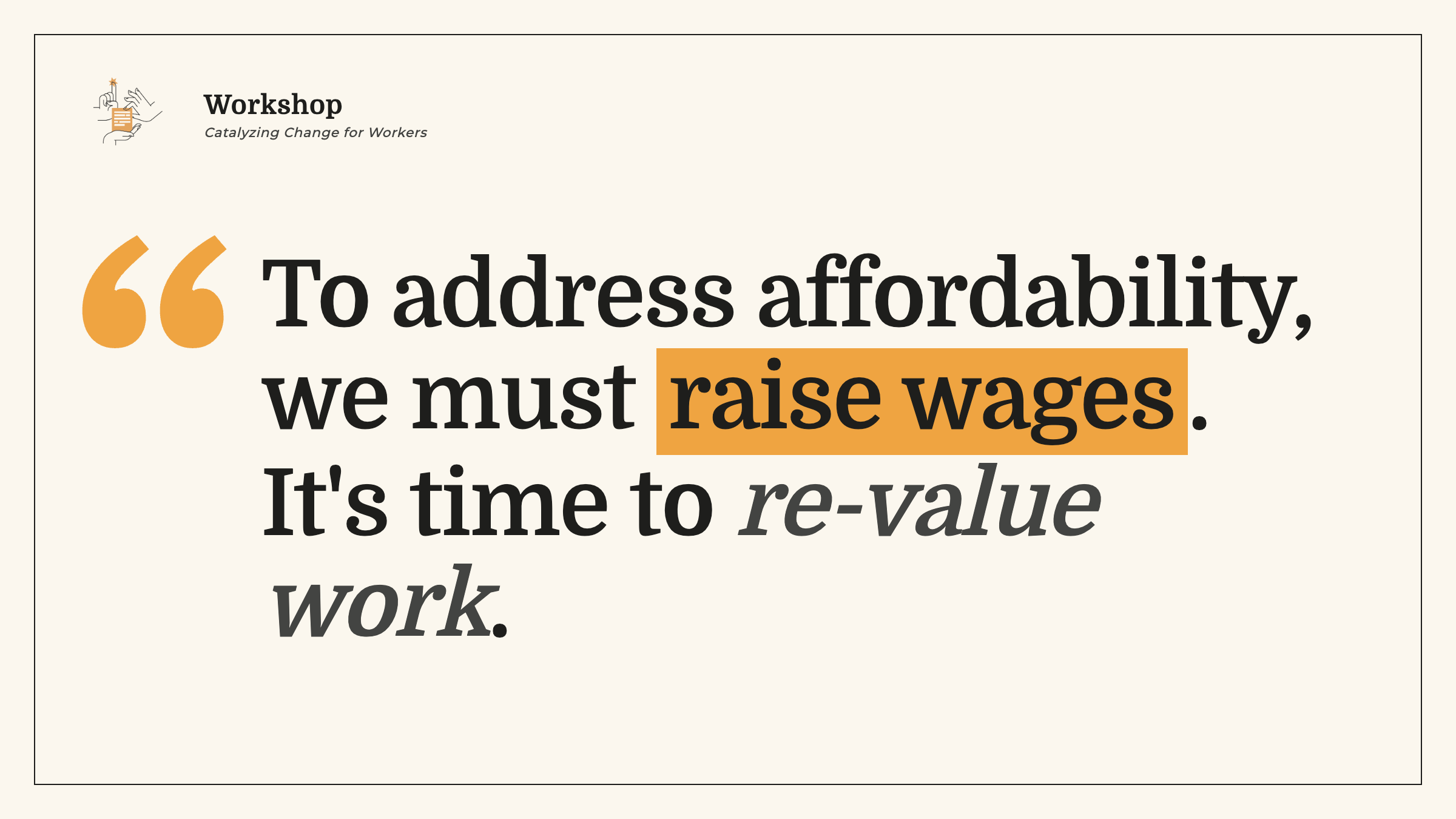
To address affordability, we must raise wages. It’s time to re-value work.
We want to know what you think:
What do you think we can or should do to raise wages?
we can and absolutely should raise the minimum wage everywhere, so people can at least afford housing wherever they live! I'm all for UBI as well. Affordability is definitely about what comes in as well as what is spent. Thanks for the reminder!
This is a necessary reframing. We often treat affordability as a cost problem, when it’s fundamentally about the gap between prices and what people earn. Focusing only on lowering costs misses the deeper issue: decades of wage stagnation and weakened worker power. What this piece highlights well is that wages aren’t a side conversation—they’re central. If work paid more of what it should, the affordability crisis would look very different. The real challenge isn’t just making things cheaper, but building an economy where work actually sustains a dignified life.